


YouTube | Apple Podcasts | Spotify
The Short Version of How I Started in Cheerleading
I didn’t choose cheerleading. My mom signed me up for a clinic at FSU and I fell in love with it from my very first stunt attempt. What followed was a decade of coaching, traveling, and eventually building Hybrid Cheer into a global training brand. This first episode of the Bonde on Cheer Podcast is my origin story and the vision behind the show.
Adamantly Against Cheerleading
I grew up playing everything: football, basketball, soccer, lacrosse, swimming, track. I eventually found gymnastics through the parkour era, then CrossFit, then Olympic weightlifting. Each new challenge pulled me in deeper.
When my gymnastics coach first suggested I try cheerleading, my response was immediate: “Coach, I don’t think I’m hearing you right. I would never be a cheerleader.”
Then my mom registered me for the FSU tryout clinic without telling me. I showed up, threw my first toss hands, and was hooked from that single attempt.
That time I Almost Didn’t Make the Cheer Team
I went into tryouts knowing I wasn’t polished. They told me guys don’t really get cut. Then they cut four guys that weekend. I was convinced I was gone and made it anyway.
The Winding Road to Hybrid Cheer
After college, I didn’t go straight into coaching. I worked in cancer research, got my MBA, took a job in investment brokerage, and wore a suit and tie to a skyrise office every day. But I kept coming back to stunt privates on the side because the demand was there and I genuinely loved it.
Eventually I stopped ignoring it. I started running college prep clinics up and down the East Coast, then across the country: California, Arizona, Illinois, Tennessee, Kentucky. When I realized I was neglecting the Jacksonville athletes who first showed me the demand was real, I opened a gym. The rest built from there.
Today Hybrid Cheer has a full gym in Jacksonville, Florida and Birmingham, Alabama, full-time coaches, events worldwide, and The Hybrid Library online.
The Problem I Kept Seeing Everywhere
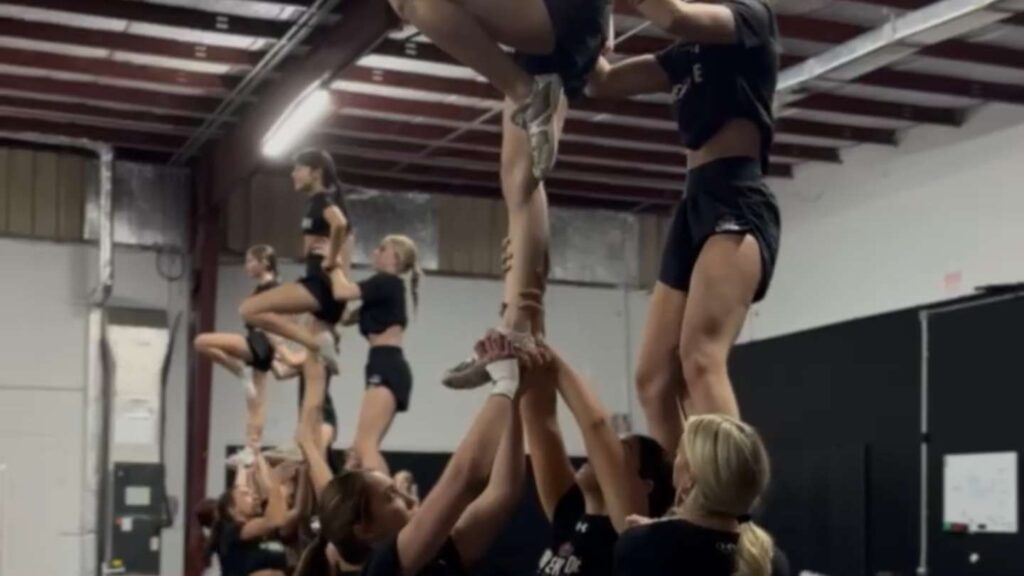
250+ clinics across the country later, I heard the same frustration everywhere I landed: there is no universal standard for technique in cheerleading.
Athletes have no guide. Coaches don’t know the technique for higher level skills. Access to people who do is limited and expensive. So everyone experiments, builds bad habits, and burns out.
Every other sport has a right way and a wrong way. Olympic weightlifting, gymnastics, even basic lifts like squat and bench: there are variances, but there’s a standard. Cheer has been missing that, and it’s been holding athletes back.
What Bonde on Cheer Podcast Is and Isn’t
Bonde on Cheer isn’t a “here’s the right way, full stop” show. It’s the opposite.
It’s a candid, evolving conversation about building a real standard for cheerleading in real time. Expect honest takes on coaching philosophy, business, leadership, and athlete development. I’ll share what I’ve gotten wrong, bring in guests with strong perspectives, and update my thinking as I learn.
New episodes will drop weekly and I look forward to connecting with you in these conversations!


I never leave comments on web pages. Dangerous. Yours, Bonde, is the ONLY.
Because of the stigma carried through from its beginnings, CHEER suffers from the stuck up nature of “Masculine Control”. Which is a psychological nastiness that has existed since the dawn of humanity itself, and WE are trying to oust in just a few short generations. CHEER is seen as weak, unable to perform in the competition of the grid, or battlefield. You touched on this very thing early in the cast. Stuck-up-ism. Not really new, is it? ;o) Because OF this, CHEER suffers a deplorable lack of overall definition. Shaping. CHEER exists, has for at least a century in THIS country, and isn’t likely to be leaving any time foreseeable. A very few individuals like YOU are actually making a dent in this problem. Yes it is clearly a problem needing solution. YOU are a serious instrument in this developing solution. You’ve already defined the critical elements of both sides of the equation.
As a beat up, run down, crippled and disabled old man living in a wheelchair on a disability pension I can do little more than be YOUR Cheer squad.
AS a sport in itself, not as a sideline activity OF a sport, WHAT is needed to formalize and found CHEER, properly? I think I see that ‘properly’ does need to be set.
Thank you for reading!
Michael