


If you have ever asked yourself whether you are a good enough coach, whether you are leading your team to success or quietly setting them up to fail, that question alone tells me something important: you have enough humility to grow. But humility without a framework is just anxiety. What you need is a structure, a pyramid (pun, intended), that gives you the confidence to coach with intention and the tools to fix problems when they show up.
That is exactly what this episode is about.
You Cannot Build a solid Cheer Coaching Framework on an Upside-Down Pyramid
Here is how most cheer programs are actually built. Tryouts happen, skills get worked, choreography gets set, and then everyone just runs the routine until competition. That is the pyramid. And it is upside down.
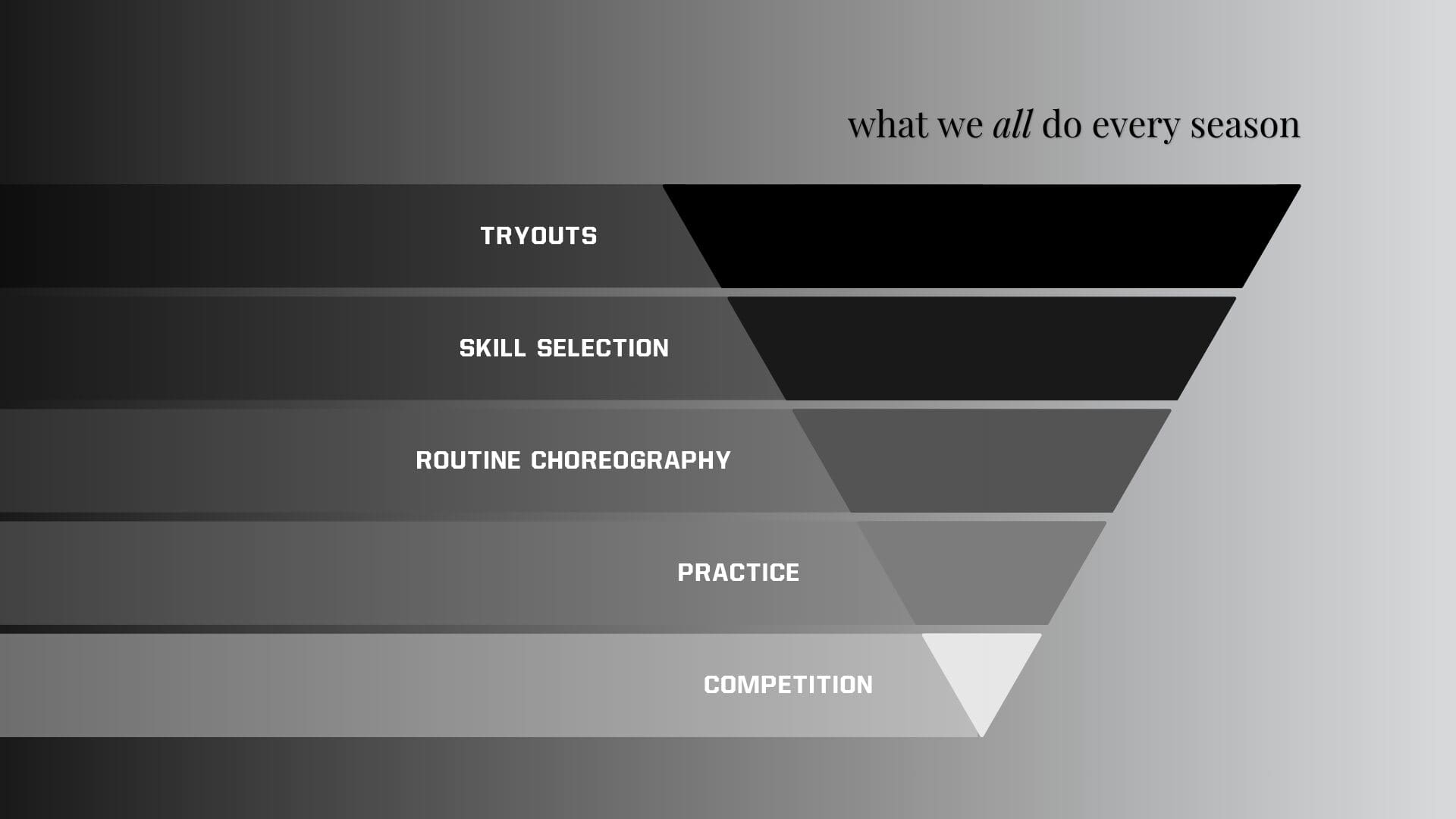
A top-heavy structure might survive for a season. But it will collapse. There is no stability in it, no root system holding it up when things get hard. Coaches who operate this way are not building programs. They are hoping their way through the season and calling it coaching.
The fix is simple to say and harder to do: flip it right side up. Build from the bottom. The foundation of the pyramid is standards. On top of that sits culture. Progress is the next tier, and performance sits at the very top. When you understand what each of those layers actually means and how they connect to each other, the whole thing starts to make sense.
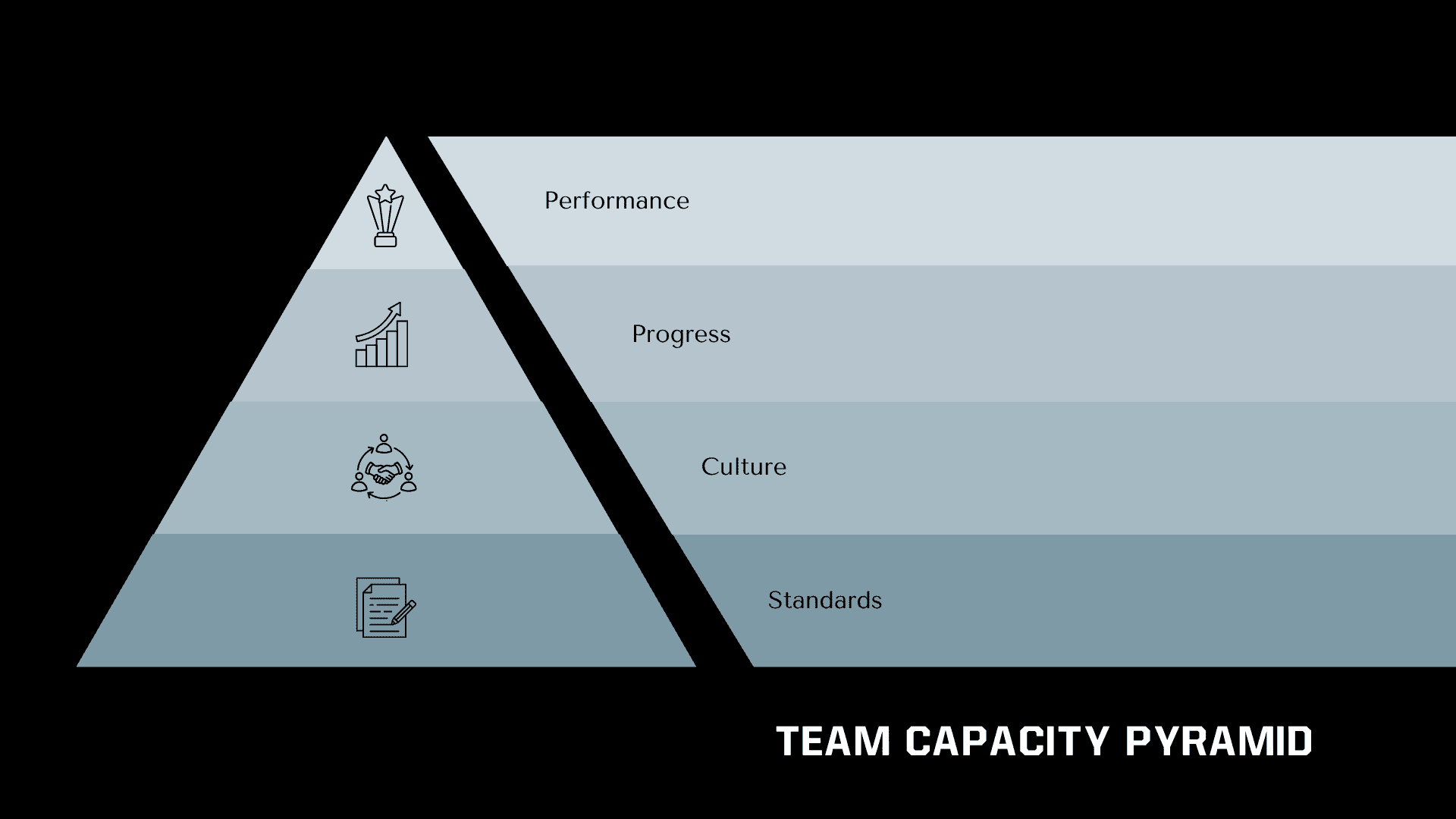
Standards Are the Foundation and Coaches Have to Own Them
Standards are your rules and your expectations. Effort levels, attendance, accountability, behavior, team goals, all of it. If you do not define these things explicitly, your athletes will define them for you. And since athletes do not know what is best for the team, that is a problem you cannot afford.
Setting the standards is the first job. Enforcing them is the second, and it is the harder one. Culture is not a vibe or a feeling. Culture is what you repeatedly tolerate. Every time a bad rep gets ignored, every time an athlete skips accountability with no consequence, every time you let something slide because the conversation feels uncomfortable, you are building a culture. Just not the one you want.
Coaches who hate confrontation tend to avoid enforcing standards. That avoidance does not make the problem disappear. It makes it permanent.
The Self-Serving Bias Is Killing Your Team Culture
There is a cognitive bias that shows up everywhere in the cheer industry, and it is worth calling out by name: the self-serving bias. This is the tendency to take personal credit for success and blame external forces for failure.
Win a competition? You are a great coach. Finish fifth? The judges were wrong. The scoring was rigged. The other teams had better resources. Sound familiar?
The problem is not that you feel good after a win. That is fine. The problem is what happens after a loss or a rough performance when you refuse to look inward. That response to failure shapes the entire culture of your team. Athletes are watching how you handle adversity. They are learning either that failure is information worth examining or that failure is someone else’s fault. One of those cultures produces growth. The other one stalls out every season and cannot figure out why.
You cannot eliminate the self-serving bias. It is wired into us. What you can do is recognize it in the moment and choose a different response.
Progress Is Where You Actually Coach
Progress is the first technical tier of the pyramid: skill retention, routine efficiency, stunt consistency, tumbling cleanliness. This is the layer where your coaching decisions live day to day. And it is the first place you look when performance is not where it needs to be.
Notice what that means: you do not fix performance by coaching performance. You fix performance by fixing progress. Run a full out, a stunt falls, and your instinct might be to address the fall. But the fall is a symptom. The root cause lives somewhere in the progress tier, and that is where you need to go.
Within progress, the athlete capacity pyramid plays a key role.
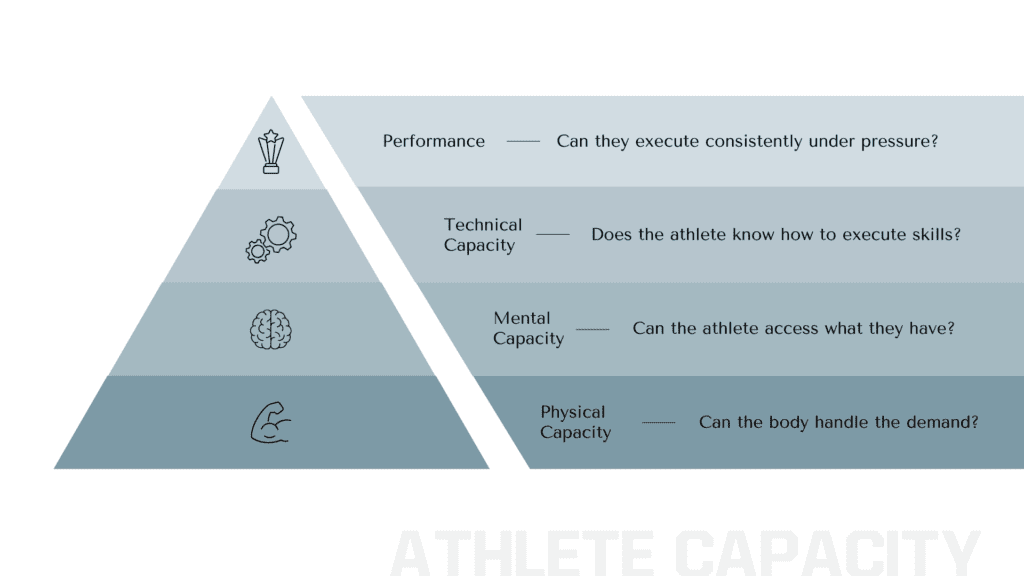
Each individual athlete carries their own technical capacity, their own mental capacity, and their own physical capacity. Those three things have to be in place for the team to progress as a whole. If you are seeing performance break down, you walk back down the pyramid: technical first, then mental, then physical. Is the athlete executing with the right speed and shape? Confidence the issue? Is the body physically capable of meeting the demand of the routine? Answer those questions before you do anything else.
RELATED: Learn how The Athlete Capacity Pyramid Works >>
Performance Is an Output, Not a Coaching Target
This is the part most coaches get wrong. Performance sits at the top of the pyramid, but it is not where you coach. It is a lagging indicator of everything underneath it. Hit routines, competition results, consistency under pressure — those things are the result of sound standards, strong culture, and real progress. You cannot manufacture them on demand.
What you can do is treat a performance breakdown the way a mechanic treats a check engine light. Covering it with tape does not fix the engine. You have to find the root cause. Walk back down the pyramid. Standards, culture, progress — one of those layers has a crack in it, and that crack is why the performance is telling you something is wrong.
A good coach does not try to control the outcome. A good coach builds the structure, enforces the standards, monitors the culture, and develops the athletes. When the performance is not where it should be, the structure tells you exactly where to look. That is the framework. That is the job.
What’s Coming Next
This episode covered the team capacity pyramid from the ground up. Coming up, we will continue going deeper into the components of this framework and how to apply it at every stage of the season. If you missed the episode on the athlete capacity pyramid, go back and listen to that one first. It is the foundation that lives inside the progress tier and will make this framework click even faster.


Show Comments